Conductor procurement · 3 min read
ACSR or AAAC: choosing an overhead line conductor
UD Fomra Group ·
ACSR and AAAC are both stranded bare conductors for overhead lines, and both are covered by IS 398. They are not interchangeable by default. The line design, span, environment and the utility's specification decide which one is used, and the enquiry should carry those decisions through.
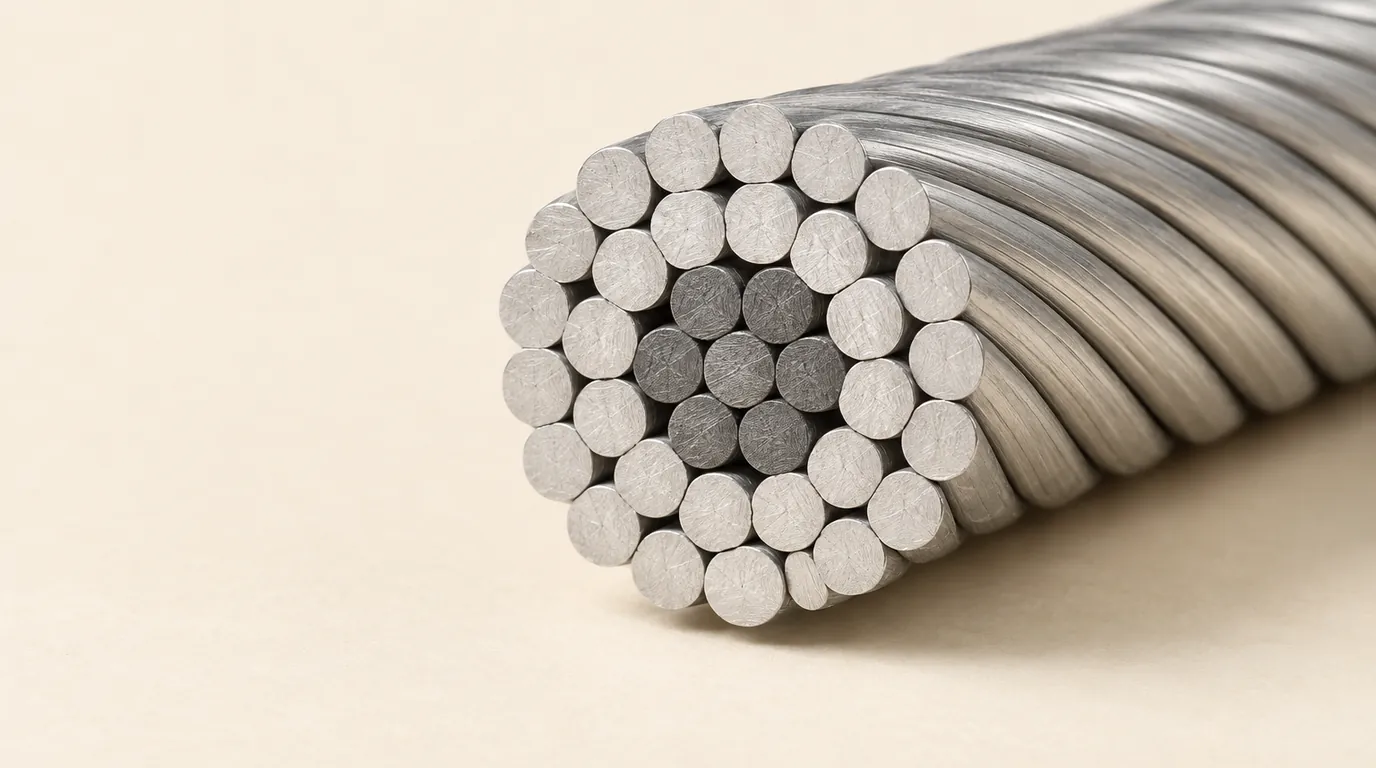
How the two constructions differ
ACSR (aluminium conductor, steel reinforced) has one or more layers of hard-drawn aluminium strands around a core of galvanised steel strands. The aluminium carries the current; the steel core carries much of the mechanical load. IS 398 (Part 2) covers it.
AAAC (all aluminium alloy conductor) is stranded from heat-treated aluminium-magnesium-silicon alloy wire throughout, with no steel core. The alloy is much stronger than pure aluminium, so the conductor is self-supporting. IS 398 (Part 4) covers it.
- ACSR: aluminium layers over a galvanised steel core, specified by code name and stranding, for example Panther, Zebra or Moose
- AAAC: alloy strands only, specified by nominal area or code as listed in the utility's specification
Where each one is usually chosen
ACSR's steel core gives a high tensile strength for its weight. That suits long spans, river crossings and lines designed around higher conductor tension, and it is the long-established choice on many transmission lines.
AAAC is lighter, has no dissimilar metals inside the conductor and usually has lower resistance than an ACSR conductor of similar diameter. That makes it a common choice for distribution lines and for coastal or industrial areas where corrosion between the steel core and aluminium is a concern. Where ACSR is used in such areas, specifications often call for a greased core.
Neither is universally better. The designer balances strength, sag at maximum operating temperature, losses, corrosion and the loads the existing structures can carry.
What the specification should already decide
Conductor selection is part of the line design, so the quotation should follow the approved specification rather than replace it. If the project is a re-conductoring job, the sag and tension on the existing towers or poles matter as much as the current rating.
- Conductor type, code name or nominal area, and the governing standard
- Total route length, number of circuits and conductors per phase
- Preferred drum length and drum type
- Grease requirement, if any, and the environment the line passes through
- Inspection, routine tests and documents the utility or EPC requires
- Delivery location and required date
Sending the enquiry
UD Fomra Group's conductor range includes ACSR and AAAC from CABCON. Send the conductor schedule or tender extract through our enquiry form, and say whether the quantity is final or still being worked out.
If you are comparing ACSR and AAAC for a new line, include the design basis you are working to. We will quote against the specification you share, and the line designer remains responsible for the final selection.