Cable procurement · 3 min read
Metallic sheaths in HV and EHV XLPE cables: what to specify
UD Fomra Group ·
At 66 kV and above, the metallic layer over a single-core XLPE cable does more than screen the insulation. It keeps water out, carries earth-fault current and sets how the sheaths are bonded along the route. Its type should come from the cable specification, and the enquiry should state it clearly.
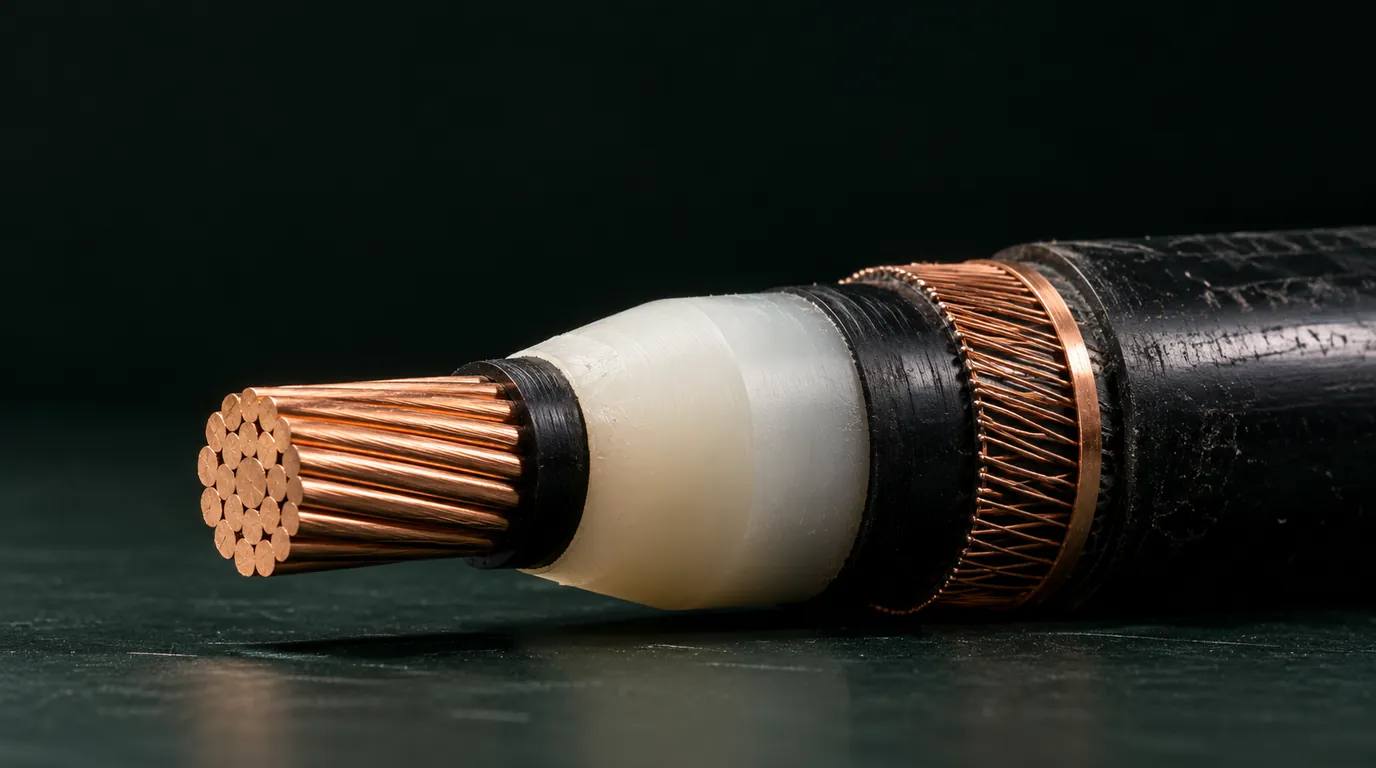
What the metallic sheath does
XLPE insulation at transmission voltages is sensitive to moisture over its life, so HV and EHV cables normally carry a radial water barrier. The same metallic layer, alone or with copper wires, forms the earthed screen around the insulation and must carry the specified earth-fault current for the specified time without damage.
HV cables are generally covered by IEC 60840 (above 30 kV up to 150 kV) and IS 7098 (Part 3); EHV cables above 150 kV by IEC 62067.
Common sheath designs
The cable designer chooses the construction from the fault rating, installation, weight and the utility's practice. These are the designs you will most often see in specifications.
- Extruded lead or lead-alloy sheath: fully watertight and long established, but heavy
- Corrugated aluminium sheath: watertight and lighter than lead, with good fault-current capacity, at a larger overall diameter
- Smooth or welded aluminium sheath: watertight with a smaller diameter than corrugated designs
- Copper wire screen with an aluminium-laminate tape bonded to the oversheath: the wires carry fault current and the laminate is the radial water barrier
Bonding and fault rating come with it
Because single-core sheaths carry induced voltages and currents, the circuit needs a bonding scheme: both-end bonding, single-point bonding or cross-bonding with link boxes and sheath voltage limiters on longer routes. The sheath type, cable length per drum and joint positions all affect that design.
Specify the earth-fault current and its duration, for example in kA for one second, rather than leaving the screen to be sized by default.
What to send with an HV or EHV cable enquiry
UD Fomra Group's HV and EHV cable range includes cables from Ducab. Send the cable specification, route details and accessory scope together so the offer covers the complete circuit.
- System voltage, conductor material and cross-section
- Required metallic sheath or screen and water-blocking design
- Earth-fault current and duration
- Route length, drum lengths, installation method and bonding scheme
- Joints, terminations, link boxes and sheath voltage limiters in scope
- Type test, prequalification and routine test documents required